
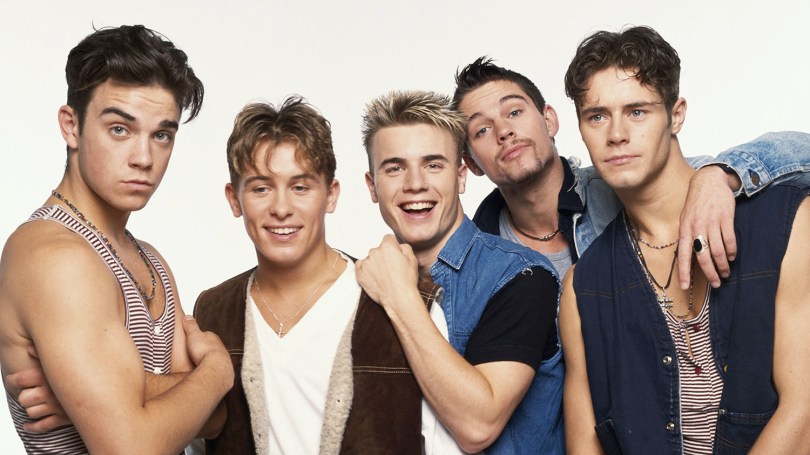
Take That are renowned as one of the UK’s most successful and best-loved boybands. Propelled by their clean-cut image and Gary Barlow’s songwriting talent, they enjoyed huge success in the 1990s before returning, a decade later, as a four-piece — achieving even greater and more enduring success.
Back in the early 90s, the band’s songwriting was largely a solo effort from Barlow, who quickly gained a reputation as a gifted and mature writer.
What many might not realise is that several of Take That’s best-known hits were heavily reworked or remixed before their single releases. Here, we take a look at some of those transformations.
Could It Be Magic
Originally appearing on their debut album Take That and Party, Could It Be Magic began life as a cover of Donna Summer’s uptempo disco version. The album track screams 1991 – all mechanical programming, tinny drum tracks and dated 90s keyboards. It’s pleasant enough, but it captures neither the sparkle of Donna Summer’s disco heaven nor the beauty of Barry Manilow’s original ballad.
Enter the Rapino Brothers. Italian-born Charlie Mallozzi and Marco Sabiu, who were making waves in the early 90s, were enlisted by the label to rework the song for single release. They transformed Could It Be Magic from a plastic, forgettable cover into the hit it became – sprinkling it with Motown magic: four-on-the-floor beats, funky piano riffs and brass flourishes.
It remains one of Take That’s best songs – and one of the few standouts from their early years not written by Barlow himself.
Original Album Version
Single Version
Why Can’t I Wake Up With You?
Another track from the debut album, Why Can’t I Wake Up With You? first appeared as a moody, electronic number sung solely by Barlow. With its eerie synths and Enya-like percussion, it’s not unlike Seal’s early work – atmospheric, haunting and beautiful in its simplicity.
Before being released as a single on the band’s second album Everything Changes, producers Steve and Paul Jervier gave it a stylish makeover. They reimagined it as a smooth, cool swingbeat track with shades of R&B and New Jack Swing. Here, the cheesy electronic keyboards are replaced with understated synths over slick breakbeat rhythms.
A brilliant addition was the backing vocal “answers”, introduced by vocal producer Mark Beswick. These became a signature feature in many classic Take That songs – giving the track a fuller, more collaborative feel. Hugely underrated and a real gem in their catalogue.
The song remains a hugely underrated track in the band’s impressive back catalogue.
Original Album Version
Single Version
Pray
For this one, we have to use our imagination for as unfortunately the original version has never seen the light of day. Pray was apparently first written as a moody, 80s-style synthpop song reminiscent of Simple Minds, complete with four verses and a lengthy five-and-a-half-minute runtime. When producer Steve Jervier was brought in to rework it, Gary Barlow was initially reluctant, frustrated at his songs being constantly remixed – but he was ultimately thrilled with the result.
Jervier reshaped it into a New Jack Swing-inspired pop-R&B track – and the rest is history. Pray became the band’s first UK number one and remains a defining moment in their career.
Its appeal lies in the contrasts: moody, soulful verses from Barlow’s smooth tenor, the band’s mirrored backing vocals, and a euphoric karaoke-ready chorus. The middle eight – “Surely we must be in sight of the dream we long to live” – is iconic enough to serve as the song’s intro when it is performed live, before the sun-breaking-through-the-clouds instrumental and the gospel-tinged climax.
It’s a masterpiece, and though I’d love to hear the original version, it’s hard to imagine Pray any better than this.
Babe
Babe closes 1993’s Everything Changes beautifully. The album version is pure early 90s – the reverberating drums, nostalgic piano chords and even a “Your call cannot be completed as dialled” sample all place it firmly in its era. In some ways, I prefer it to the single version. It has a more singer-songwriter feel: organic, raw and a touch rockier than the later single.
Whilst the verses sound similar, the key differences are a slightly more slick production style – particularly the evident in the bridge to the chorus with the finger-click style percussion before a soft percussive bongo-drum-like drum machine carries the chorus. The strings and drum machines make the song feel a lot more mature in nature and were the right choice for single release.
Mark Owen’s slightly low, yet angelic vocals are stunning in both versions, and the storytelling — of a lover returning home in hope of rekindling the past – is some of Take That’s most heartfelt work. Gorgeous.
Original Album Version
Single Release
Never Forget
One of the band’s best-loved anthems, Never Forget also underwent a major transformation. The album version, produced by Brothers in Rhythm (Dave Seaman and Steve Anderson), is smooth, soulful and rich with gospel influences. They reworked Barlow’s demo by adding a gospel choir, rearranging chords, and recording the band together around one microphone. Robbie Williams’ now-famous ad libs were recorded in one take – a bittersweet moment, as he left not long after.
The album mix opens with dreamy chimes and Howard Donald’s soulful vocals, flowing into a silky R&B groove. It’s reflective and chilled – a gospel-pop masterpiece in its own right.
Then came the single version, reimagined by rock producer Jim Steinman (who worked with the likes of Meatloaf and Bonnie Tyler). The eerie intro was replaced by a triumphant brass fanfare and boys’ choir singing the middle eight of the song, before the song erupts into an explosion of sound. Howard Donald’s soulful vocals enter over programmed bass and shimmering drum elements. Then, the song becomes similar to the original form, just elevated a bit with beefed up bass and a heavier drum. Subtle touches – like the rhythm guitar on “finding a paradise wasn’t easy, but still…” – add to its live, stadium-ready energy, as do the crashing drums, rock piano riffs and flourishes of brass. The Queen-inspired handclap breakdown seals it as one of pop’s most iconic climaxes.
Both versions are brilliant, but Steinman’s bombastic production turned Never Forget into something transcendent.
Original Album Version
Single Version
Bonus: Give Good Feeling
I couldn’t finish without a niche but essential addition – Howard Donald’s 2007 remix of early album track Give Good Feeling.
The original, from Take That and Party, is a pure early 90s dance-pop banger – all house piano chords, bright synths and cheeky lyrics.
For the Beautiful World tour in 2007, the band decided to perform the song as a throwback for all of their original fans. Donald reimagined it as a modern house track. Kicking off with Jason Orange repeating “On the dancefloor” before launching into thumping beats, pulsing bass and fuzzy synths, it’s a total reinvention. Gary Barlow’s vocals glide over minimal production before the beat drops back in for a euphoric chorus.
The outro – complete with glitchy, video game-like sound effects and chopped-up vocal samples – is another highlight of this remix. It’s far removed from Take That’s usual sound, yet it works perfectly, showing how adaptable their early material can be and proving Howard’s credentials as a seriously talented DJ.
A brilliant rework of an underrated song.
Original Version
2007 Live Version (Sonic Fly Remix)
So, there we have it. Which versions of each song do you prefer?
Let me know in the comments below!
 the-music-box.co.uk