Jess Glynne – I Cry When I Laugh Album Review

A1C7qRrVACL._SL1500_

It feels as though no week in the past year has witnessed Jess Glynne absent from the UK singles chart. She has quite literally been everywhere, showcasing her rich soulful vocals with a multitude of friends in the industry; Clean Bandit, Room 94, Tinie Tempah and now, on the album, Emeli Sande. Indeed, it is likely Sande is responsible for Glynne’s never-faltering presence in the music industry; she too once was everywhere. Glynne should be cautious – Sande’s current absence from the industry lead to a sigh of relief from most of the general public who needed to recuperate from Sande’s over exposure (we’ve heard quite enough of ‘Read All About It’, thank you very much).

Those in camp Glynne have certainly been exceptionally savvy in generating a buzz for the album; the build up to its release has taken well over a year, beginning with the release of quirky ‘Rather Be’ with Clean Bandit last year. Since then, Glynne has taken a musical apprenticeship with a range of music industry acts, scoring five UK Number One and two top ten singles. Unfortunately, the album itself is a mixed bag of successes and weaknesses.

Musically, ‘I Cry When I Laugh’ is a joyous affair, full of bouncy house tracks, R&B jams and funky soul numbers. It’s all very 90’s. Glynne’s inability to strip any of the tracks of hand-claps makes it all rather uplifting and soul-stirring; at times the listener might question if they are listening to an album or attending a church service. Lyrically, however, the album tells an alternative story. Much of the album’s material discusses heartbreak or unstable relationships. The contrast between lyrical and musical content is one of the album’s strengths, a refreshing take on a heartbreak album.

The album utilises a range of genres, the main being R&B. Pleasant album opener ‘Strawberry Fields’ (not of any relevance to the track by The Beatles) is a leisurely R&B jam which signifies what’s yet to come. ‘Gave Me Something’ follows suit with house-styled piano riffs and catchy hip-hop beats layered with hand claps. ‘Ain’t Got Too Far To Go’ on the other hand, is a fun pop track with squeaky violins and honky-tonk piano chords, hip hop beats, football chants and gospel-influenced harmony layers. ‘Why Me’ continues the R&B thread, featuring Boyz II Men-esque backing vocals, although this is bought up-to-date with its unsettled dub-step percussion. The influence of Prince is conspicuous on ‘You Can Find Me’, one of the album’s stand-out tracks featuring giggling synthesisers, the return of gospel session singers, slamming beats and funky bass riffs. It’s a ‘Raspberry Beret’ for the modern generation.

Elsewhere, the album remains loyal to Glynne’s signature dance-pop/house sound she became famous for. Singles ‘Don’t Be So Hard On Yourself’, Huge dance smash ‘Hold My Hand’ (still an enjoyable listen), ‘Real Love’ (a victim of exposure) and ‘Right Here’ are all powerful, catchy dance hits that have become radio airplay staples. Disappointingly, other hits ‘Rather Be’, ‘My Love’ and huge summer banger ‘No Letting Go’ are reduced to bonus tracks, a cheap marketing technique to encourage fans to invest more money and purchase the deluxe version of the album.

The main issue with the album is it avoids providing much scope. Only two ballads are present, ‘Take Me Home’ and ‘Saddest Vanilla’, a duet with Emeli Sande. Both are pleasant enough but avoid any real emotional depth. The album’s up-tempo, in-your-face nature, whilst an admirable approach, becomes a little intense, monotonous and excessive half-way through and cries out for more variety. The album therefore works more effectively in small doses than as a full album listening experience. The over-exposure of most of the singles also mean these all fall rather flat, bogging the album down.

‘I Cry When I Laugh’ tries painfully hard to impress and in places it does. It’s all a lot of fun, tinged with elements of gospel music and 90’s house, it’s just all a little intense as a whole and becomes somewhat intolerable as a complete album. Nevertheless, its bold and optimistic ambience is to be admired. What it lacks in scope it makes up for in spirit.

Rating: 3/5.

‘I Cry When I Laugh’ is out now on Atlantic records.
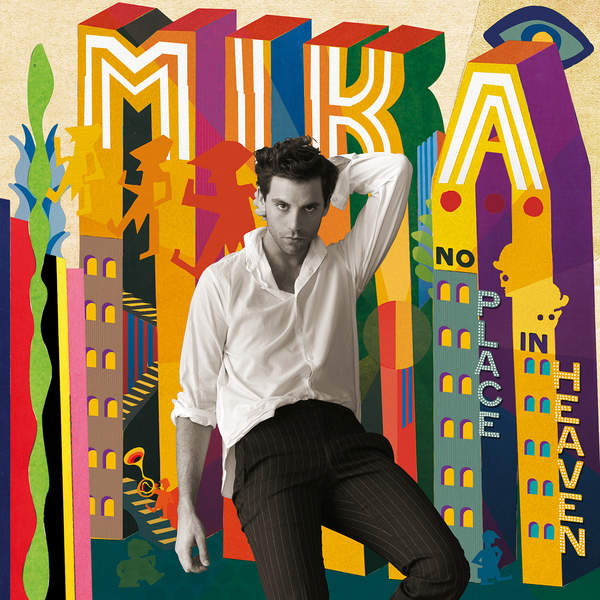
Mika – No Place in Heaven Album Review

cover600x600

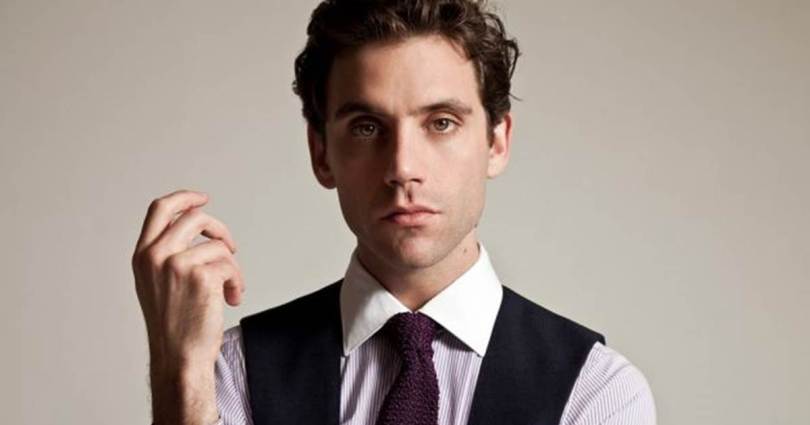
Any mention of Mika usually results in association with his smash début single ‘Grace Kelly’. It’s hard to believe that it’s been eight years since ‘Grace Kelly’ topped the chart in the UK and multiple other countries around the world. Certainly, accompanying album, ‘Life in Cartoon Motion’ was also a huge success, spawning four top ten singles. Follow up album ‘The Boy Who Knew Too Much’ was also a success but lead single ‘We are Golden’ was its only real triumph with follow up singles bombing outside of the Top 40. 2012 saw the release of ‘The Origin of Love’, an imperceptible musical departure from previous albums but one which did signify greater maturity. The album limped into 24 in the UK album chart, hugely disappointing for an album worthy of a far better reception.

Spring forward to June 2015 and there was the surprise arrival of Mika’s latest offering, ‘No Place in Heaven’ which seemingly appeared out of no-where. Perhaps Team Mika should invest more on promotion and generating the buzz that first surrounded Mika at the beginnings of his career. Still, it has so far fared at least a little better than ‘The Origin of Love, peaking at number nineteen in the UK album chart.

‘No Place in Heaven’ is an archetypal Mika album, drizzled in camp abundance, littered with falsetto easy sing-along melodies, an over dependency on the bashing of piano keys, foot stomping percussion and containing more fun than a barrel of monkeys. It’s a return to the immaturity and simplicity of Mika’s first two albums, perhaps in a desperate attempt to regain some of his seemingly fading commercial magic. It’s an irresistibly catchy album full of well-written hooks, organic instruments and a strong vocal delivery from Mika as always; his extensive vocal range is certainly to be admired.

Album opener ‘Talk About You’ begins with a buzzing bass line before launching into a bouncy, buoyant pop-track with an irresistible melody. ‘All She Wants’ maintains the party atmosphere with ‘Mickey’-esque cheerleader hand claps, rich and layered harmonies and a rousing chorus. The album briefly visits the 1960’s with the springy and flamboyant ‘Oh Girl You’re The Devil’ whilst it all goes a bit Fleetwood Mac on ‘Rio’ It’s the up-tempo tracks which are most effective on this album; the ballads remove the fizz and energy of the album aside from the lovely ‘Good Guys’.

It feels like Mika is having a whale of a time and rightly so. He’s delivered a fine album, a master-class in song-writing as always and more than proves his worth. It’s not quite as robust as ‘Life in Cartoon Motion’ or as consistent as ‘The Origin of Love’ but it’s an admirable pop album which proves our UK artists are still something to be very much proud of.

Rating: 4/5.

‘No Place in Heaven’ is available now on Casablanca records.

Take That Live 2015 – Review

Picture courtesy of Capital FM.

For many, a Take That tour is the pinnacle event of the year; an exuberant spectacle of nostalgia, triumph and escapism. Past proceedings have involved cars onstage, rain machines, holograms, a transportable elephant, and a gigantic twenty metre robot amongst countless other stunts, polished dance routines, props and backdrops. But in 2015, at the ages of 43 (Owen), 44 (Barlow) and 47 (Donald), you would have perhaps thought Take That tours may begin to demonstrate signs of deceleration. Latest tour ‘Take That Live 2015’ showed nothing of the sort, however.

Take That’s live shows of 2015 was the latest risk in a series of many; the foundation of Take That’s career has been built upon gamble. Their career in the nineties was steered precariously by manager Nigel Martin-Smith who had exceedingly limited managerial experience prior to their existence. Then there was their launch amidst camp, flamboyant performances in gay clubs dressed primarily in bondage gear. Fast-forward to 2005 and a tentative return occurred, minus Robbie Williams, then five years later, just as fans had become used to Take That as a four-piece, Williams entered the fold once more. Just when it appeared that things had all settled in the Take That camp, 2014 brought an amalgamation of simultaneous risks. Since 2011’s hugely successful Progress Live tour, Williams had once again taken flight, returning to solo projects; his attention on the arrival of his second child with wife Ayda Field. Meanwhile, the Thatter fanbase was rocked pugnaciously by the surprise departure of much loved member Jason Orange. Incorporate a highly publicised tax scandal and theoretically, the continuation of Take That shouldn’t have been possible.  But once again, Take That took a risk which paid off, attaining a number one single, a number one album and a sell-out arena tour featuring ten shows at the O2 arena in London.

Picture courtesy of Unreality TV.

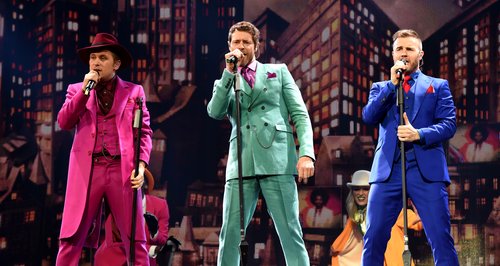
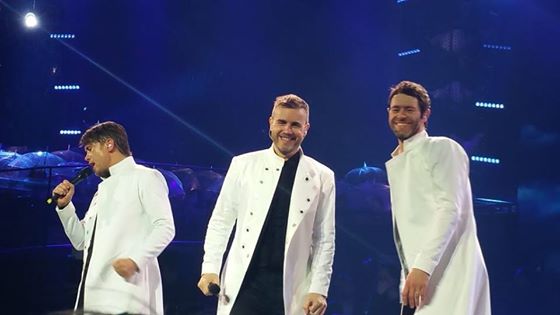
Take That’s live shows of 2015 were some of their best yet, a lavish affair with no expense spared. Confetti explosions, fire canons, schizophrenic lighting, an immense back catalogue of pure pop hits and the odd dance routine, Take That were out to please. And that they did. “We are what’s left of Take That”, the man-band chant in unison. It’s one of a handful of comical lines delivered by the band but one that carries a poignant undertone. Whilst Williams’ absence is less problematic (the public had five years to become accustomed to Take That as a four-piece after all), Orange’s is more conspicuous. There was a visible cavity onstage and Orange’s presence was still greatly missed both on a visual and entertainment level.  There were a handful of particular poignant moments (his verse in ‘The Garden’, backing vocals on ‘Up All Night’ and most dance routines) where the beginnings of sentimentality crept in.  These were never allowed to develop excessively, however and were vastly prevented by the industrious production onstage.  Indeed, sometimes, it was almost as if the franticness of onstage proceedings was to compensate for the loss of Williams and Orange; in a sense, it worked. There was seldom a dull moment, rarely an opportunity to dwell on Orange’s absence for more than a few seconds.

Electro-pop breathy synthesiser interludes no doubt Donald’s influence, bursts of colour, a mob of cast members descending onstage parading in colourful attire and anoraks, an eccentric male protagonist involved in bizarre experiments, eruptions of Willy Wonka-esque encouragement carry the show for fifteen long minutes before Take That’s explosive arrival onstage prompting rapturous cheers and ear-piercing squealing from the audience. ‘I Like it’ is the perfect opener to the tour, a flamboyant electro track comprised of squeaky synthesisers, meticulously synced hand claps for maximum audience participation and a rousing chorus. “I don’t know what the people see but I like it”; it’s evident the song was written specifically for the live occasion. The trio power through more crowd rousing tracks, Progressed’s ‘Love Love’, ‘Get Ready For It’ complete with eruptions of flame followed by ‘Greatest Day’ staged with minimalistic production, a wise decision as the song holds the crowd enough alone. It’s still as euphoric as ever, prompting raised arms from most audience members and explosions of multi-coloured ticker tape to envelop all super-fans in the inner pits.

take-that-in-concert--1430211911-custom-0
Picture courtesy of Capital FM.

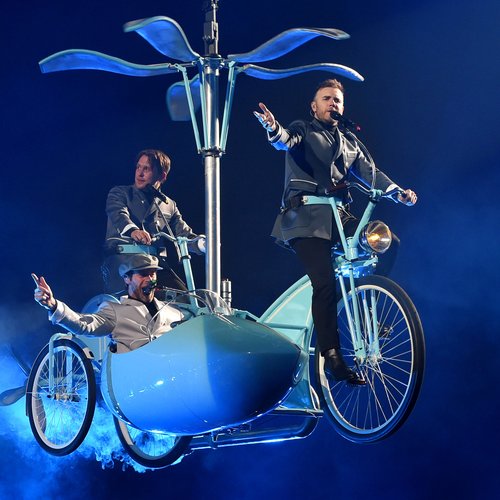
The foremost surprise in the evening is the stunning and theatrical performance of ‘The Garden’, the opening track to 2008’s ‘The Circus’ album. Accompanied visually by a spectacular silhouetted puppet show, projected onto two huge white curtains which encompass those in the inner pits, it’s a beautiful moment for all those in the arena and the perfect complement to a song that frankly deserves greater credit. Another pinnacle of the show, ‘Portrait’, is performed as Barlow, Donald and Owen soar above the heads of thousands of adoring fans on a bike-come-tandem-come-side car hybrid. It’s a spectacular moment and somehow, the barber-shop-styled chorus is maintained pitch perfectly. The inclusion of ‘Affirmation’, a previously neglected ‘Progress’ album track written primarily by Donald is another surprise. It could have potentially served as a toilet break opportunity but intelligent staging in which the Take That lads become evil techno-gods thumping out the song on synthesisers and drum machines make it work and bizarrely won the audience over. The thunder-god theme continues onto ‘The Flood’ complete with stormy backdrops on large LED Screens and assistance from a rain machine. 90’s hits ‘Relight My Fire’ (presented with an oriental theme on this tour) and ‘Could It Be Magic’ contain as much camp abundance as back in their hey-day, accompanied by dynamic dance routines whilst an aerial performer romps around acrobatically in an elevated, illumine sphere for summer belter ‘Let in the Sun’. As Owen himself acknowledges, the show borders on serving as a voyage through British weather.

Elsewhere, just as the show becomes in danger of becoming profligately exhausting, the thirty plus assemble is removed from the stage for more gentle moments, mostly for classic Barlow-ballads. ‘Flaws’, sung beautifully by Gary Barlow is accompanied by a beautiful contemporary dance routine smothered in homoeroticism by Owen and Donald. A shirt lift mid-way through by both members induced wild screams from the audience, reinforcing the unfaltering sex appeal fastened to the band. It’s a move that prompts a mixed response from critics but sends fans into overdrive. Likewise, other songs require less of a spectacle to be made. Major hits are performed with minimal fuss: timeless pop perfection ‘Patience’, the gorgeous ‘Said It All’, ‘Pray’ and even ‘Back For Good’ is left well alone on this tour, performed sitting on stools, a move Barlow has previously been the first to criticise. Perhaps the intensity of live shows is finally getting to them after all. Regardless, many of Take That’s hits are strong enough to be performed without major production, leaving all expense to be lent to other parts of the show.

Picture courtesy of Birmingham Mail.

The set list itself mainly draws upon TT4 material – songs recorded between 2006 and 2009, a decision which confused many critics. Criticisms are unjustifiable however. At least one song from all seven Take That albums is performed; fans are well catered for. Occasionally, Barlow’s voice becomes a little uncertain, the first time in the band’s career in which there is an auditory strain to hit certain notes although equitably, this is on the band’s more demanding material. This is compensated through the swing-styled vocals he adds to the ending of ‘I Like It’ and the cleaner falsetto vocals he manages to produce on ‘Portrait’ which somehow manage to exceed the record version.

The show temporarily closes with ‘Rule the World’, which remains Take That’s superlative song, before an encore of ‘Shine’ and ‘Never Forget’ follows. The latter closes the show triumphantly as always; the sight of twenty thousand pairs of arms in the air for the latter is breath-taking and the perfect finale to a magnificent show.

They may have been two men down in a downsized venue (gone are the football stadiums, although they have been replaced with still impressive sized arenas) but Take That somehow managed to surpass previous tour Progress Live with a vibrant, theatrical and greatly entertaining show, the music event of the year.

Rating: 5/5.

S Club 7 Bring it all Back Tour Live – Review

s-club-7_1
Back in their hey day

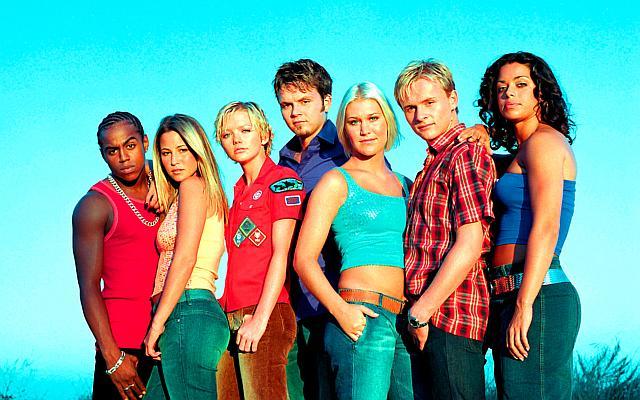
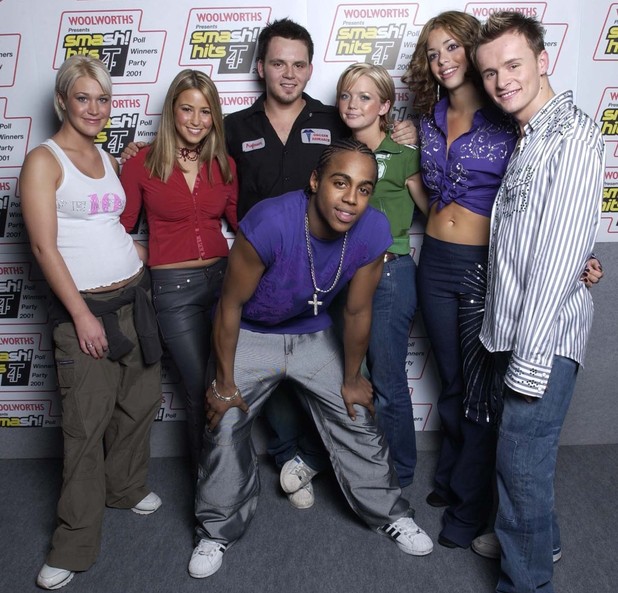
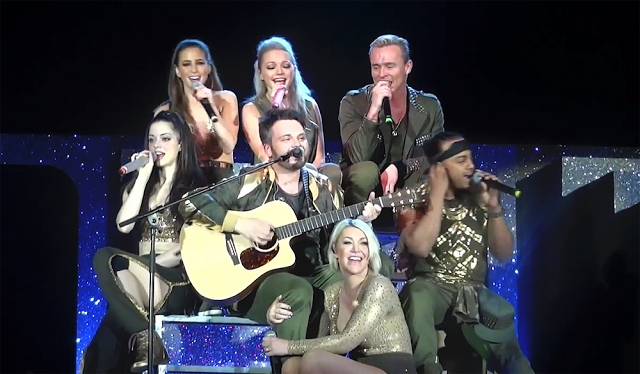
There was a lot riding on S Club 7’s 2015 Bring it all Back reunion tour. A rather rusty and slack performance on Children in Need last year left the public all rather apprehensive on the reunion of the spectacular seven. “Can Jo no longer sing?” “I’m not sure Paul can get down on the floor anymore.” “Do they not have a stylist?” You get the drift. Still, there was an air of excitement and a consistent buzz on social media for weeks in the aftermath of S Club 7’s first performance as  a seven-piece in twelve long years. Since their break up in 2003, S Club 7 have long been affiliated with nostalgia. They were an integral part of many’s childhoods, more so than anything could be to children today. They had their own TV show(s), documentaries, albums, tours etc. They were huge. And rightly so. What they lacked in credibility they made up for in fun. Every song was a hit (usually co-written by pop genius Cathy Dennis) and guaranteed to leave a huge smile on your face (except the ballads which could admittedly result in the odd tear…) S Club 7 were all that was good about the 90’s and noughties. They were the soundtrack to people’s childhoods, a pure reflection of joy and elation. No wonder, then, that demand to see them was so high for their reunion tour.

Fans needn’t have been worried about that Children in Need performance. It was evident that much hard work and intense rehearsals had taken place prior to the tour. Dance routines were slick and polished, harmonies were tight (admittedly aided by a little pre-recorded playback) and most importantly lead-singer Jo O’Meara has DEFINITELY still got it. Critics were quick to comment upon her shaky and flat vocal performance during the CIN extravaganza which O’Meara dismissed as nerves. Over the course of the tour, she more than proved she’s still got her powerhouse vocal, the backbone of all S Club 7 recordings.

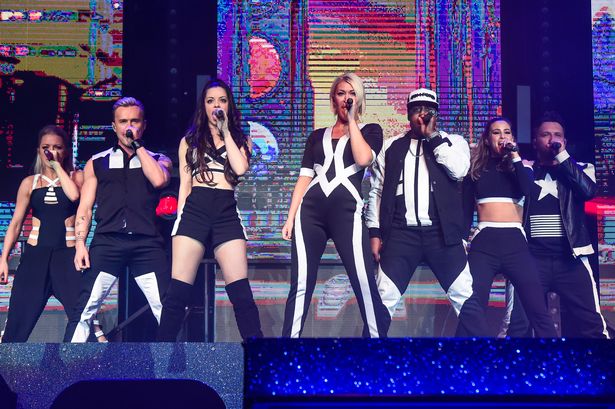
The show opened with pulsing techno beats, more smoke than a sauna and six dancers in fluorescent clothing ostentatiously bouncing around the stage. “This is not a drill”, an assertive voice resonated into each corner of the 02 arena. A countdown from seven to zero with clips of the S Club 7 from their heyday climaxed with each member rising one by one from the inner depths of the stage. “7” album track “Bring the House Down” was a brave choice to begin a reunion concert with, considering it was never a single release but it was a wise choice. A common favourite of fans with tonnes of energy, it truly got the party in swing. From then on in, the group powered through their hits with more gusto than an 80’s workout video, sending the audience wild. Aside from minor weight gain and a few wrinkles, it was like no time had passed. Tina still did her thing, Jon is still looking for romance, Paul could just about get down on the floor, okay, you get it. “S Club Party” sent a rapture through the entire arena whilst “You’re My Number One’ had a slight musical makeover which dragged it from the 90’s more into euro-pop territory. “Love Ain’t Gonna Wait for You” was accompanied by a highly polished dance routine which went down a treat.

JS63007216-2
[Photo from Digital Spy].
Unfortunately, the show dangerously lost its focus for a while. Each member performed a solo number, an unnecessary move that to many, was an excuse to nip to the bar or have a quick loo break. Tina Barrett’s performance of ‘Stronger’ (an S Club 7 album track from ‘Sunshine’) would have been fine if she had been accompanied by the other six members. Hanna Spearitt lip-synched her way through Paula Abdul’s 1988 hit ‘Straight Up’ whilst Bradley McIntosh ‘DJ’ed’ a mixture of throwback S Club songs. They were far from bad performances, just rather baffling to fans. Other solos were more successful however. Paul Cattermole’s solo version of ‘Reach’ in which he accompanied himself with an acoustic guitar, began slightly apprehensively but soon won fans over and was a beautiful moment in the show. Jon Lee and Jo O’Meara, by far the strongest vocally in the group, performed old S Club 7 b-side ‘Hello Friend’. Their fantastic and incredibly underrated vocal abilities were really showcased and their voices blended effortlessly with each other. Rachel Stevens performed a mash-up of two of her massive solo hits – ‘Some Girls’ and ‘Sweet dreams my LA ex’, again, a welcome addition to the show. It does feel a little like the inclusion of all other members’ solos were squeezed in to justify Stevens’ solo segment, however. It’s most likely most S Club 7 fans would rather them have been replaced with other S Club material. There was a missed opportunity to perform “Show Me Your Colours”, an album track from ‘Sunshine’ and firm fan favourite. Even more disappointing when Stevens (soloist on the track) informed a fan it was originally on the setlist. Other material such as ‘Friday Night’, ‘Best Friend’, ‘Sunshine’, ‘Summertime Feeling’, ‘Let Me Sleep’ and ‘Gangsta Love’, the list of potential successes goes on.

CF9W9IPXIAAKpuX
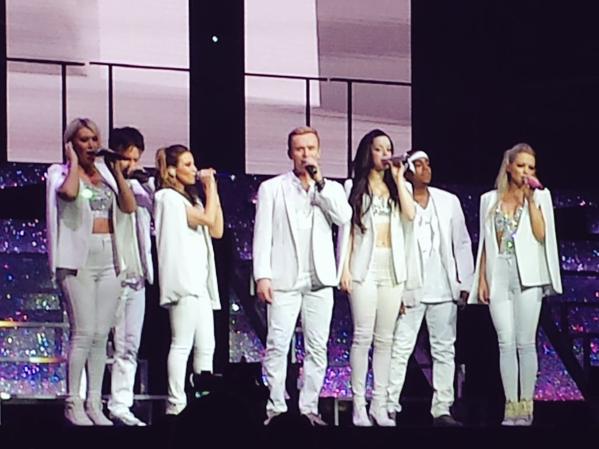
The white costumes are out which can only mean one song… Never Had a Dream Come True! [Fan photo from Twitter].
That said, the solos are hardly worth of a complaint. The hits were all there and the running order worked well too. Fans went wild for biggest hits ‘S Club Party’, ‘Reach’, ‘Don’t Stop Movin’ and ‘Bring it all back’ and each of these songs were performed with as much energy and charisma as the first time around.  The ballads were some of the finest moments of the show, however. Of course, these too were more saccharine than a tub of Ben & Jerry’s ice cream but it’s easy to forget quite how beautiful they were. “Two in a Million” has to be one of the greatest and most underrated cheesy-pop love songs ever. “Say Goodbye” only served as a painful reminder to the group’s break up and was surprisingly rather poignant, resulting in the group standing on-stage to regain their composure and take-in the atmosphere for a couple of minutes before ploughing on. “Have You Ever”, easily one of the group’s best songs in their catalogue was a stunning moment in the show where O’Meara really showcased her incredible voice and the group’s harmonies formed a gorgeous wall of sound. “Never Had a Dream Come True”, the penultimate song, was also gorgeous but was gladly followed by the more up-tempo and less intense “Don’t Stop Movin’ to close the show.

Perhaps the most refreshing element of the show was the group’s genuine appreciation to be there. Of course, money is always a significant factor in groups reforming but with S Club 7, it was evident that they were overwhelmed by the response of their ever-loyal fans and were having a whale of a time onstage. This created an even more vibrant energy and atmosphere. There was also a much-valued acknowledgement of the fact their fanbase are all adults now, demonstrated in each member’s statement in the tour programme and enjoyable cover of ‘Uptown Funk’.

The only real fault in the show aside from the bizarre solos was the lack of a live band. Considering their past shows always featured a live band to accompany them, it felt a bit slap-dash, a bit Eurovision/X Factor, a shame when the production in general was so well constructed. Despite this, the show provided an evening of nostalgia, a time capsule back to the late 90’s where all of us twenty-somethings could become primary school children again. And if that doesn’t brighten up your life for just a moment or two, nothing will.

Rating: 4/5.

Screenshot - 22_05_2015 , 20_36_24
The last date of the tour involved the other six band members joining Paul onstage for his acoustic rendition of ‘Reach’. [Image from entasia.net].

Circa Waves – Young Chasers Album Review

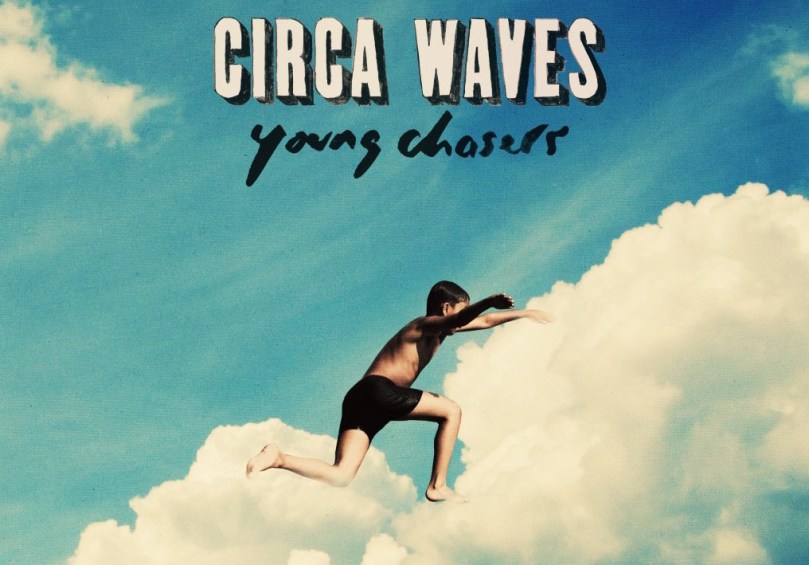
CW_YCA_SLEEVE-1024x1024Every now and then, the release of a new album affirms the UK’s continuing affection of the indie scene. Liverpool’s Circa Waves are the latest act to do just this with their début album ‘Young Chasers’. It’s fun, it’s uplifting and a great album, one which will no doubt be the sound blaring from many teenagers’ tinny, portable speakers at the park this summer. A throwback to the indie scene a decade ago, it’s influenced by Arctic Monkeys, Razorlight and the Libertines; an album of youth, enthralling love and boozy Friday nights. Whilst most of the album documents the vertiginous, infinite moments of adolescence, occasionally, frontman Kieran Shudall’s contemplations capture the transition from adolescence to adulthood, professing trepidations such as “I’m a little too young with not enough time”. Refreshingly, producer Dan Grech-Marguerat avoids frolicking around with computer generated sounds and instead focusses on the recording of the band itself, their two guitars, bass and drums.

Part of the album’s success lies in its length. ‘Young Chasers’ avoids being presumptuous and clocks in at forty minutes in length with many of the tracks being just two minutes long. This keeps the album succinct in nature and avoids becoming monotonous.

What ‘Young Chasers’ lacks in innovation, it makes up for in charm and charisma. It’s a fun, festival fuelled album and a very enjoyable listen.

Rating: 4/5.

“Young Chasers” is available now on Universal/Virgin EMI.


Take That ‘III’ – Album Review

It’s safe to say 2014 has been an incredible roller-coaster for Take That. Allegations of tax avoidance scams, the loss of a band member, the release of one of the fastest selling albums of all time and Amazon’s most pre-ordered album in history; it’s safe to say it’s been up and down for Britain’s most loved man-band.
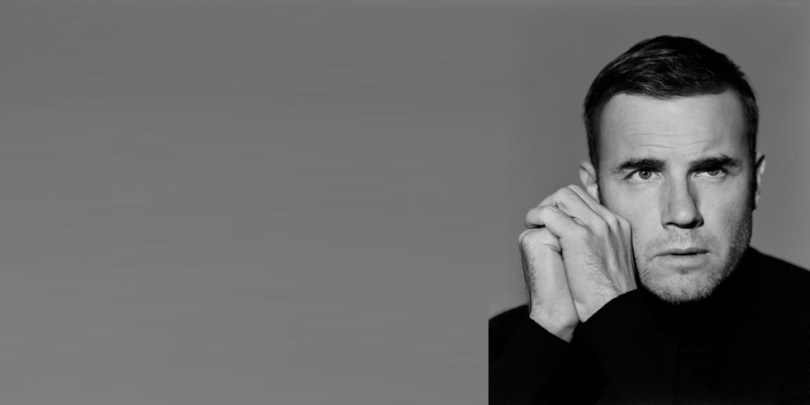
This week, it emerged latest single ‘These Days’ had become their twelfth UK Number One single and on Monday, their brand new album – their first as a three piece – ‘III’ was released. An insight into each track is provided below.

1) These Days

A piece of pop perfection, it’s easy to see why this Nile Rodgers/Chic-style track with funky guitar riffs, punchy percussion and tight harmonies has well and truly established itself as one of Take That’s finest records. It’s a song of optimism and it’s irresistibly catchy. Barlow, Donald and Owen’s voices are all audible and fused to provide rich layers of harmonies. A killer opener.

2) Let In the Sun

Take That do Calvin Harris. Except better. It begins gently with Barlow’s rich vocals drizzled with Donald’s falsetto, both melting effortlessly into a symphony of synthesiser before developing into an up-tempo dance track with elements of Take That’s signature sound. If all the synthesisers were removed and the thumping percussion, it could have slotted in perfectly on ‘The Circus’ album with its optimistic lyrics. It never quite takes the plunge into full dance-pop territory, however, there’s definitely some Mumford & Sons in there but it’s still a powerful, feel-good track, a stand-out from ‘III’.

3) If You Want It

A return to Greg Kurstin-infused-pop here and it works beautifully. It’s unmistakeably Take That – catchy, verging on entering cheesy territory and utterly irresistible. In-keeping with all tracks so far, it’s bold, buoyant and a great, great pop track. Tight harmonies too – Howard and Mark’s vocals are both crystal clear and give the track an extra dimension.

4) Lovelife

Barlow generously hands over lead-vocal duties to Mark Owen on this catchy number. Painting the image of a group of Frenchmen performing the track on street corner in Paris with an accordion, it’s a little unconventional and seemingly draws upon European dance-pop music as its foundation. It’s well written and catchy but not quite as congenial as the previous tracks and therefore the album becomes slightly off-kilter with the addition of ‘Lovelife’.

5) Portrait

Stuart Price is back, frolicking with synthesisers and computer-generated sounds again, not dissimilar to much of the material on ‘Progress’. It’s not as intense, however, the first minute or so is gentle and tentative, allowing the listener some much needed rest from the intensity of the first four tracks. Barow’s falsetto flutters over soft guitar strums and timorous synthesisers before Donald and Owen join the fold in the rousing Barber-shop-styled chorus. It is 100% in the same vein as The Circus’ ‘Hold Up A Light’ but with increased vigour. The barber shop refrain is utterly irresistible and the driving drum beat maintains the song’s momentum. Price’s production really glistens on this beautifully created and performed track. Another stand-out moment.

6) Higher Than Higher

The closest to a classic Take That ballad you’re going to get in the first half of ‘III’. Precarious percussion and jittery synthesisers open the track before it stabilizes into a steady marching beat. The song is largely carried by the effortlessly cool and rather insane R&B-styled production provided by little-known American duo Mattman & Robin. Barlow delivers perfect, tender vocals whilst Donald and Owen provide gorgeous harmonies, reverberating into the spaced-out, meticulously programmed percussion. Their repeated ‘higher, higher than higher’ harmonies in the final part of the song somewhat bizarrely but beautifully emulate an African choir. It’s one of many lovely touches which contributes to its success. It’s a song full of meaning, passion and it’s utterly beautiful. Quite possibly one of Take That’s best songs of their career.

7) I Like It

Take That go all Muse once more. It’s a return to the ‘Progress’ era and it’s absolutely bonkers. Imagine an amalgamation of ‘Shine’ and ‘Underground Machine’ and ‘I Like It’ is born. The synthesised bass, minimal instrumentation and buoyant percussion all contribute to the catchiness of the song and just when you think producer Stuart Price has exhausted all technical improvement tools, a mechanical middle-eight kicks in, in which Barlow’s vocals are lowered in pitch to create a robotic voice. A fun piece of pop.

8) Give You My Love

A song that could have easily slotted in on the ‘Everything Changes’ album, Barlow’s clearly been having a whale of a time frolicking around with his keyboards. This is the one time Thatters are able to enjoy Donald on lead vocals, a bizarre move when the loss of two band members surely presents the opportunity for more equal distribution of lead vocal duties. Still, Donald succeeds on this pure and simple fun track.

9) Freeze

Ice-like imagery, proficient production, slamming percussion and Barlow’s falsetto steer this song, resulting in a powerful 80’s-esque song. Likely to be one of a handful ballads written after Orange announced his intention to depart from the band, there is a sincerity in it’s lyrics. Personal, heartfelt and emotive.

10) Into The Wild

A dramatic and explosive moment, with tribal drums, Owen’s distinctive and intense vocals and a sing-song chorus, this is a powerful addition to ‘III’. Barlow, Donald and Owen have clearly taken great pleasure in imitating other bands on this album and ‘Into The Wild’ presents the opportunity for them to be The Killers. It’s an undoubtedly powerful song glimmering with brilliance.

11) Flaws

Ah, finally. A Barlow ballad! The chance of one of these appearing looked slimmer and slimmer by the song but here we are. ‘Flaws’ is a pretty, piano-based ballad which sounds like an out-take from Barlow’s ‘Since I Saw You Last’ album. In an attempt to capture the raw effect, it appears Barlow has positioned himself rather too closely to the microphone, resulting in distortion more than anything else. It’s well-written, although previous Take That ballads are far superior.

12) Get Ready For it

Another dramatic song in the same vein as ‘Freeze’ and ‘Into The Wild’. ‘Get Ready For It’ (rumoured to be the second single) is a pop-rock stomper that closes the standard version of the album perfectly. It’s powerful, euphoric and a complete stadium anthem.

13) Believe

‘Believe’ is an enjoyable piece of pop-rock, reminiscent of the material on Owen’s solo album ‘The Art of Doing Nothing’. It’s an enjoyable song with a big chorus but the boys made the right decision to leave this off the standard edition and put it on the deluxe instead.

14) Amazing

Take That do The Beatles! This couldn’t be any more different stylistically to the rest of the album and therefore it is understandable this has been demoted to a bonus track. It’s a gorgeous song nonetheless and it’s a shame this won’t take pride as a standard edition album track on a pop-rock Take That album. The harmonies are gorgeous, the instrumentation simplistic and the lyrics slushy. It’s unmistakeably Take That and very beautiful it is too.

15) Do it all for Love

A haunting closer to the deluxe version of the album. Mark Owen wails over guitar arpeggios and unmistakable Take That piano chords before the song climaxes into a dramatic power ballad. It’s a powerful, incredibly emotive track with a killer bridge. It’s reminiscent of ‘Nobody Else’ album closer ‘The Day After Tomorrow’ which Owen also performed lead vocals on.

Barlow perhaps put it best when he described ‘III’ as an amalgamation of Take That’s material from the second time around. As an album, it jumps around stylistically, therefore it lacks the cohesion of ‘Progress’. The choice of material on ‘III’ is far superior, however. The fusion of the ‘Beautiful World’, ‘The Circus’ and ‘Progress’ albums works wonderfully, amalgamating the sincere lyrical content with electro-pop and experimental instrumentation to create an incredible, roof-raising album.

Rating: 5/5.

‘III’ is available now on Polydor.

Congratulations, Gary Barlow.

This is a post I’ve meant to write for the last week or so but you know how hectic life can get!

Two weeks ago, Gary Barlow released his first solo studio album in 14 long years. A lot has happened in that time for him, for each individual member of Take That and Take That itself. Promising solo careers faded far into the horizon, the underdog proved victorious and bitter rivalry resulted in long-term rifts and years of anonymity.

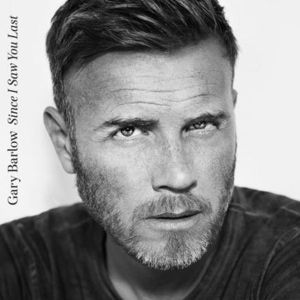
600px-Since_I_Saw_You_Last_Album_CoverWe all know the story, Gary’s debut solo effort ‘Open Road’, whilst not perhaps the album he initially intended it to be due to record label input, flew straight into Number One in the UK album charts. Three top 10 singles later (including two Number Ones) and it was decided Gary was well and truly on the right track. Fast forward two years and the dance track ‘Stronger’ was released which reached Number 16. Whilst a respectable chart position, it was the beginning of rocky time. ‘For All that You Want’ charted at a disappointing #24 and Gary’s follow up album ‘Twelve Months Eleven Days’ limped in at an unfair #35. A range of factors have been attributed to the lack of commercial success of Gary’s sophomore solo album; the press, promotional decisions, Robbie Williams. Whatever it was, there’s no denying that such a great album should have fared far better in the charts.

‘Twelve Months…’ was far from a bad album. It showed a high level of musicality and diversity. ‘Stronger’ was more dance-pop orientated, ‘Wondering’ disco-pop along side all of Gary’s classic Barlow ballads. ‘Lie To Me’, which would have been the third single from the album, was considered by critics as one of Barlow’s best compositions at the time and I can’t help but agree. A dramatic, beautiful song, it showed that Gary’s creativity was far from gone.

But the press turned against him. Robbie had turned against him. The public followed. Gary was dropped from his record label and faded into anonymity, facing his humiliation in private. He turned his back on music and gained a significant amount of weight, turning to food for comfort. After a period of depression, Gary turned his life around. He formed a successful career as a songwriter with his friend Elliot Kennedy and the pair spent a successful few years writing for many pop artists.

Then in 2005, Take That returned. I don’t think any of Take That could have anticipated the high demand and high public appreciation for them when they returned. It was supposed to be ‘one last tour’ and a documentary. This transformed into a brand new studio album, the perfect ‘Beautiful World’ which performed fantastically in the charts and much praise was aimed in Barlow’s direction for his songwriting. That isn’t to undermine the other members of Take That’s songwriting ability, however. They all have a key and fundamental role. It’s simply that Barlow is the ringleader, perhaps the member that gets the ball rolling musically. Take That’s success was rebuilt and two more studio albums followed including the reconciliation with Robbie Williams.

During Take That’s hiatus, solo careers began again. Robbie released his best studio album in years with the defiant ‘Take The Crown’. Mark released the criminally underrated ‘The Art of Doing Nothing’. After a successful string of UK tour dates, Gary decided to follow suit and ‘Since I Saw You Last’ was born.

I have to be honest, on my first listens to previews, I wasn’t convinced. My first listen to ‘Let Me Go’ disappointed me hugely. Why? Because it sounds extremely like Mumford and Sons who are one of very few bands that really aren’t my cup of tea! But some songs really caught me even in the previews and I pre-ordered the box-set which arrived around a month later. Not liking the previews didn’t concern me. The ‘Beautiful World’ previews left me underwhelmed. Now it’s my favourite album ever released by any artist.

I loved the album on my first complete listen and I have only grown to love it more with every listen. It’s a beautifully created album. It doesn’t attempt anything drastically different. There’s no experimentation with different genres but that doesn’t matter at all. Instead, we hear lots of guitar driven songs with a hint of folk music. ‘Requiem’ is an awesome opener reminiscent of The Beatles and following the formula of ‘Shine’ a little.

Songs such as ‘Let Me Go’, ‘Small Town Girls’ and ‘This House’ are very ‘Mumford and Sons’ orientated and are perhaps my least favourite songs on the album. I still think they’re great tracks, don’t get me wrong, they’re just not my cup of tea.

Then we reach my favourites. ‘Jump’ is an inspiring and beautiful composition written with Keane’s Tim Rice-Oxley. It’s interesting on this album how many songs borrow elements from Take That’s previous work. The middle eight uses a chord structure extremely similar to Take That’s ‘You’ from The Circus album. Similarly the incredible title track sounds a little like ‘How did it come to this’, also from The Circus. ‘Since I Saw You Last’ is a powerful, energetic song that’s bound to be an epic moment when performed live. You can tell it contains what Gary’s been longing to write for the last fourteen years – “For those who stood and watched, go f**k yourself”, he declares. It’s definitely a highlight of the album and arguably one of Gary Barlow’s best compositions.The repetition of “I know you heard” at the end of the song always hits me emotionally. ‘6th Avenue’ is a sweet song which is rhythmically simple to the sweeping, stunning ‘Like I Never Loved You at all’ from Take That’s Beautiful World album. That’s not to say that these songs rip off existing Take That songs – far from it. They just use a formula that Gary obviously knows works.

‘God’ is another highlight for me. With a haunting introduction and stunning piano runs, it’s an utterly enchanting song. Inquisitive, meaningful lyrics really make this track and it’s a beautiful moment on the album. ‘Face to Face’ is the catchiest song to hit the UK for months. With a little help from Elton John, this is an incredible song sure to stay in your mind for days to come. It’s great to see Gary writing with John Shanks again (responsible for co-writing and producing much of the Beautiful World and The Circus albums) and I really hope they team up again with the other members of Take That when they create Take That’s next album.

Then we reach more tender songs. ‘We Like to Love’ sounds like a hybrid of jazz/easy listening music and something Coldplay would release. It’s an absolutely beautiful song and it’s gorgeous to be able to hear Gary sing in his lower range again which I don’t feel we’ve heard properly since the title track from ‘The Circus’. Then we reach the heartbreaking ‘Dying Inside’. A raw, simplistic song which features just a piano, cello and Gary’s voice, it’s a haunting, gorgeous song. It’s obvious what this song is about, so much so it doesn’t need to be discussed. It’s hard to listen to but at the same time, it’s Gary at his best.

Two songs I also love are only featured on the deluxe version of the album. ‘Mr Everything’ features beautiful piano instrumentation and is just a great track. I particularly love the lyrical content on this one, especially “Ain’t life so cruel when you’re just not good enough?”. And finally, ‘Actress’. I believe Actress is one of Gary’s best songs ever. It’s remarkably catchy and the lyrical content is quirky but extremely clever. It’s just an incredible song.

I think it’s heartbreaking to read so many dismal press reviews of this album. Many called it ‘durgy’ and ‘boring’ but it’s far from that. It’s an honest, fantastically written album. Gary sticks to what he loves and does best – pop-rock songs and beautiful ballads. So what if it doesn’t push boundaries? So what if it doesn’t cause controversy? It’s been created lovingly and that’s perhaps the most important thing in music. Gary didn’t need to create this album. He created it because he felt he had something to give as a solo artist and because he WANTED to.

‘Since I Saw You Last’ reached an amazing Number Two position in the UK album charts on its release. Why am I so proud? For many reasons. It was a tough week in the album charts as Gary faced fierce competition from those such as One Direction (who were always undoubtedly going to reach the Number One spot). Also it takes a lot of guts to face the world as a solo artist again when things ended so sourly before. Jason Orange once said in an interview “Gary didn’t fail” (regarding his solo career). I couldn’t put it better myself. Gary didn’t fail the first time around, it was due to circumstances beyond his control. No matter how good his second album was, it was never going to be successful due to the press and public perceptions at that time.

I’m proud of Gary Barlow for having the guts to release another solo album. For getting back up from that dark place he was fourteen years ago. For creating such a beautiful piece of art. And for getting to Number Two in the album charts when it’s extremely difficult to do so in this day and age.

Proud member of the GB Army right here.